
Teaching Introduction to Earth Science at the Design Academy
how to compress four and a half billion years into a week

January and February gone in a flash. Record snowfalls and cold-snaps shut down infrastructures and governments but not communities. People responding with excellent taste.
Last week I was sunk by some virus, walloped from the inside by microscopic megafighters. The recovery has included in some of the worst brain fog I have ever experienced, my mind shrunk, calcified, and drop-kicked across an event horizon. Anyways, this has been written in bits and pieces, and is mostly a reflection on teaching, with books & art recommendations below.
A few weeks ago I returned to the Design Academy in Eindhoven to teach a week-long introduction to earth science. My audience was first year masters students in the Geodesign program who had limited scientific or math backgrounds. My goal was to give them a bit of a sense of the “Geo” in their degree title from the partial-view perspective1 of western-ish earth & climate science. Each day we met for 5-7 hours. Over the course of the week we covered: the culture (and vocabulary) of the scientific process, the formation of the earth, deep time, plate tectonics, the rock cycle, oceans, the cryosphere, and the atmosphere. We culminated with a discussion of orbital & planetary controls of climate, and how and why and what even is the climate crisis. The days involved lectures, experiments, art projects, field trips, independent writing, group discussions, and independent research. The syllabus is here, and I’m happy to share the powerpoints, just send me an email.
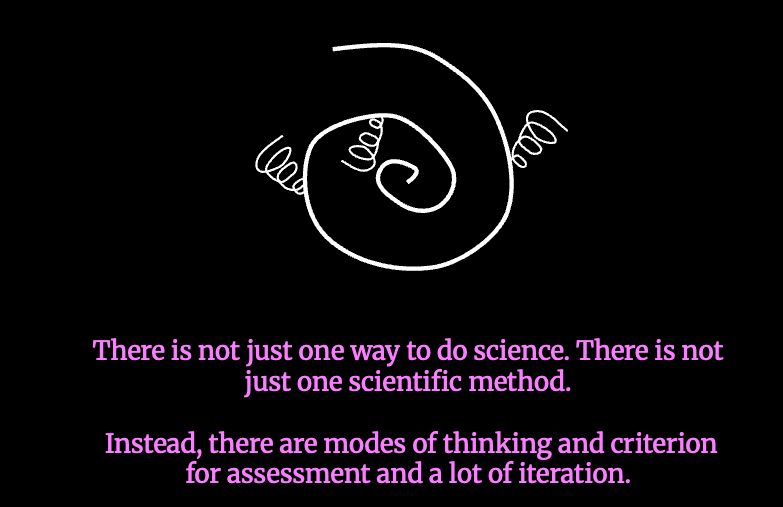
Conveying all of earth science in a week is not ideal for building understanding or retention, and you have to know going into it that you’re not so much teaching as moderating exposure. In my teaching/learning-informed opinion, you need at least four interactions with a topic, word, or idea to begin to get a hold of it. Once to realize it exists, second to remember it exists, third to define it, and fourth to revise what you thought you knew and begin to understand it. Students who did the reading got two of those four repeats for a few specific concepts–deep time, viscosity, glaciers—but mostly, this was a week of first exposure to almost all the topics.
This informed how I framed the week. I wanted students to get a sense of the planet’s interconnectedness, I wanted them to see some vocabulary so the next time it wouldn’t be brand new, and I wanted to give them a lot of doors to open should they choose to continue with a particular subject. This meant developing a multitude of ways for them to access and engage with the content. I did lecture, but restrained lectures to 30-45 minutes at a time, and these were always followed by a non-lecture, e.g., a break, a discussion, a writing exercise, etc.
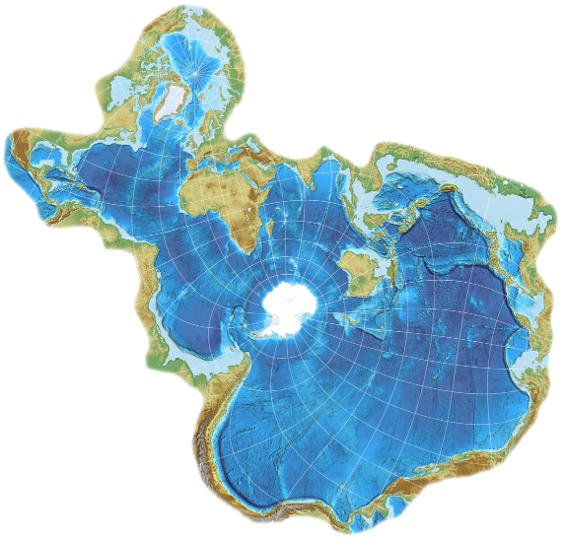
Some of the doors I offered up included:
A library: I brought in ~30 books from my personal library, and students could check these out for the week. This was extremely successful: almost every book was checked out at some point or another, and also, every book was returned to me, to treasure forever. For a list of the books, see this footnote2.
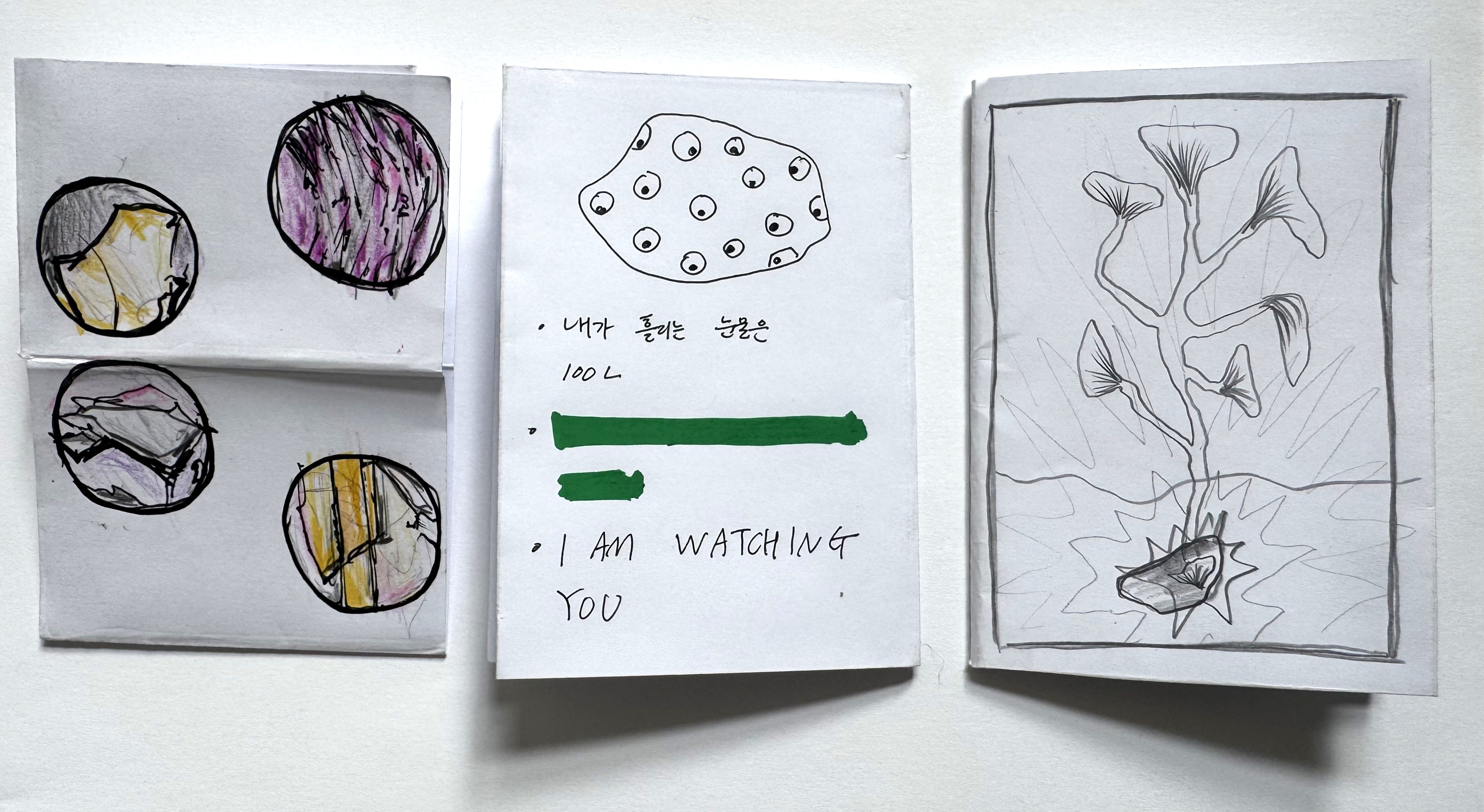
Paper + art supplies: I always bring extra paper + crayons/colored pencils/pastels. Students can use whatever they want. I encourage doodling and coloring a la Lynda Barry. We used these supplies to make zines about the rock cycle, too (based on Hannah Perrine Mode’s and my Story of a Rock activity.)
Daily reflections: every morning, I gave the students 3-5 questions to respond to. These questions related to the reading, the previous day’s lecture content, or some other relevant topic. Students were given 15-20 minutes to write on their own, giving them time to: a) low-key practice recall of various topics, b) let them tie concepts together on their own, and c) give them a chance to think more broadly about how the topics we covered might fit into their own interests. Some students wrote by hand, some on their computers. Sometimes this was followed by a paired or group discussion. A lot of students liked these.
Daily Notecards: Every day I handed out blank notecards to each student and had them write their name/date. I asked them to jot down notes, key points, complaints, questions, and doodles throughout the day, then turn these in at the end of each day. I wanted a way to get a sense of what was sticking (or not) in the students minds, as well as give them a chance to voice questions or frustrations without having to tell me in person. This didn’t work that well; a few students participated but most forgot to write anything or didn’t turn them in. I still like this idea but I think it would work better if we were meeting once a week over a semester rather than every day.
10-minute one-on-ones: For their studio week projects, I asked students to write 1-2k-word-long first draft with a visual component and citations. I gave them some ideas of what they could do but my only real requirement was that it genuinely engaged in with earth and climate science. These one-on-one meetings were invaluable. I got to know the students a little, and meet them where they were at, assuage many of their doubts, and guide them away from trouble.
1-2 minute public project presentations: Friday morning, we started with each student sharing out their projects very casually: short and no visuals required. I wanted to give students practice talking through half-formed ideas out loud. I was glad to see a lot of them were specific and open about their uncertainties and their possible paths forward.
Fieldtrips & experiments: ideally with an earth/climate science class, you can get outside and see some of the things we’re talking about. Unfortunately a) it was February and b) we’re in the Netherlands which has engineered its way out of natural landscapes. We made up for this by
doing experiments in class: thermohaline circulation, the density and temperature differences that drive ocean circulation, is ready made for this: with water dyed with teabags and blueberries, we set up experiments looking at how salt and temperature change water density. If you put hot water on top of cold water it doesn’t mix, they just stay stratified! If you melt an ice cube in cold salty water, it stays as a freshwater layer on top!
taking field trips to three labs at Utrecht University: the Metronome, which has a 10-m long analog delta (sandbox that tilts with water in it); the Paleomagnetism lab (how do you design a lab to have the least magnetic field?! build it in a fort!); and the TecLab (using sand and goo to mimic plate tectonics). This also gave students the chance to meet other scientists and dispelled, I think, a lot of presumptions folks have about who is a scientist and how they approach their work, like that they were all very aware of how simple their systems were compared to real earth processes.
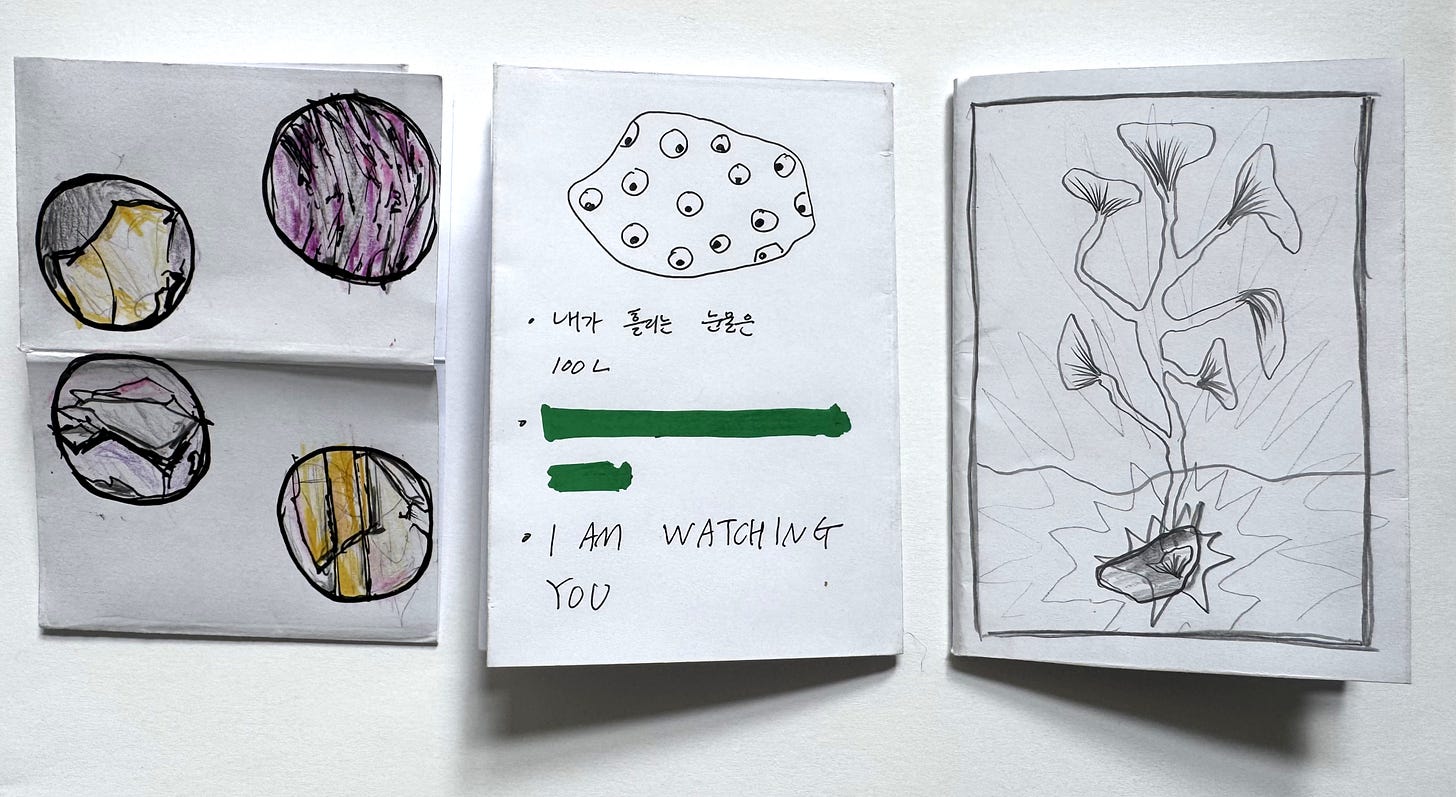
Some student zines, documenting the geologic origin, texture, and superpowers of a rock from my rock collection. So sweet <3
I structured the day and the week so that students could scaffold their energy level and engagement. This included:
Plan of the day: I introduced each day with an overview of what activities & concepts we were going to cover. Students knew what was coming (sorta).
Regular breaks + lunch: I built in 15 minute breaks every 60-90 minutes and an hour for lunch every day. This is well supported by research on learning and it works!!!!!! Also has the added benefit of making me less tired after having taught/interacted all day. Students voiced a lot of appreciation for this, and were generally engaged throughout the day. Anecdotally, when we couldn’t do this (e.g., on a field trip), engagement dropped precipitously after 90 minutes (like, students falling asleep).
Lectures loaded up at the beginning of the week, and late starts at the end of the week: Monday and Tuesday were heavier on lectures; Wednesday we took a big field trip to the Utrecht Science Park for tours of three experimental labs; Thursday and Friday we started at 11 instead of 10. Thursday afternoon we devoted 2 hours to their projects, and Friday we devoted almost the whole day to them. I was around for them to chat with as they ran up against problems in their research. This was great for the students and for me - by the end of a week like this I’m pretty socialized out.
And a personal plug: if you are a non-scientist interested in hiring me to teach introduction to earth & climate science, please get in touch! I’m particularly good at teaching science to artists and/or getting scientists to do art. My contract ends at the end of June and am looking for freelance teaching, writing, and research jobs starting in September.
A few standouts from the last January and February, which was otherwise taken up by writing about 1,000 proposal, job, and fellowship applications and then teaching and then being sick.
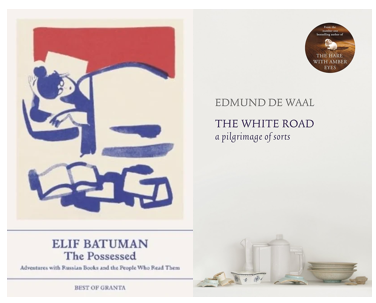
I loved Elif Batuman’s The Possessed. I am contentedly neutral on her fiction writing but I LOVE (CAN YOU TELL) her non-fiction writing3. This hilarious collection of essays describes her journey to and through her PhD at Stanford studying Russian literature. And OK, I am admittedly an academic just a couple years outside of finishing my own PhD, which means I read this collection as cheap a form of therapy since my therapist moved back to New York. But, IMO, this is the hero*’s journey to strive for: having steeled yourself with a strong sense of self, you dedicate yourself for brief periods of time to obsession and monomania, and surround yourself with people who do the same. Copious use of absurd similes like “As Alice in Wonderland plays croquet with a flamingo for a mallet, I was playing tennis with a goose for a racket.” and “As a Keebler Elf factory is hidden inside a hollow tree, so was an entire security office concealed within a gatepost.” Would send to all prospective PhD candidates, regardless of field.
In The White Road: A Pilgrimage of Sorts Edmund de Waal brings us with him in his search for the history of, and his own need to understand, porcelain. de Waal, an accomplished ceramicist and writer, uses his how-did-I-get-even-get-here bewilderment to fuel this journey across continents, from Jindezhen to Bavaria and on to South Carolina. I’m a sucker for a good craft book, especially one about what it’s like to do art, and this a book that’s good for pottery and writing and the entanglement of material, culture, art, and empire. It is definitely written from a western (e.g., his) point of view, and there are times when de Waal stumbles. But I loved it. It’s gorgeously written, a travelogue that feels like it’s meant to be listened to. Narrator Michael Maloney’s got that pitch-perfect English accent that makes you feel like a baby in a cradle. I listened to it both for the story and as an anxiety soothing tactic for all sorts of things like: picking up my residency permit, biking very slowly to work, and existing in 2026. I’d love to teach an earth science class with porcelain at the center! You could have it all: geology, trade winds, plate tectonics, rivers, ocean circulation, field sketching, etc etc. Any ceramicists want to link up?!
I just watched this Art21 video about multimedia artist Candice Lin. She has an exhibition at the Whitechapel Gallery in London which is on until MARCH 1st (Sunday!!) so if you are in London go go go.
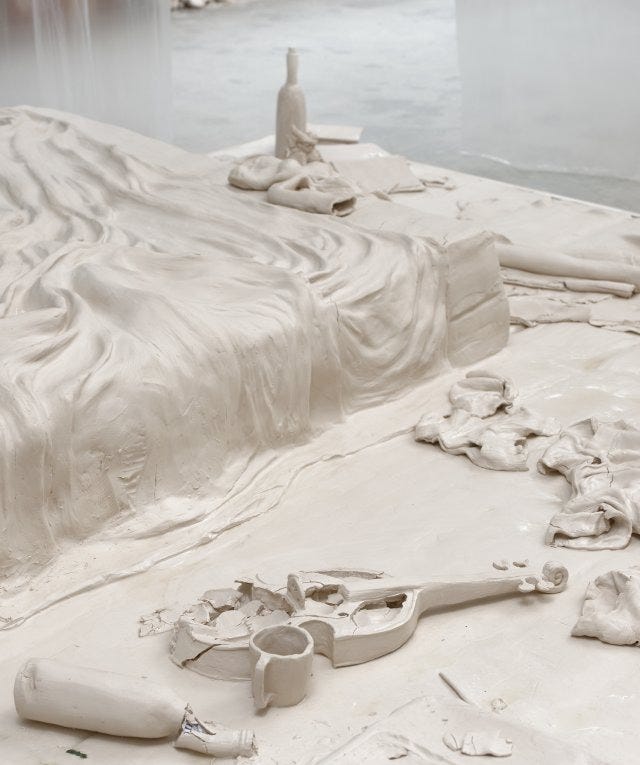
And finally, Dave and I wandered into the Perrotin Gallery when we were in Paris at the end of January and were floored by Kathia St. Hilaire’s incredible solo show, The Vocals of the Chaotic Burst. St. Hilaire weaves, paints, scrapes, collages, embeds, and links materials together in a way that generates powerful emotional resonance through texture. She is so good.
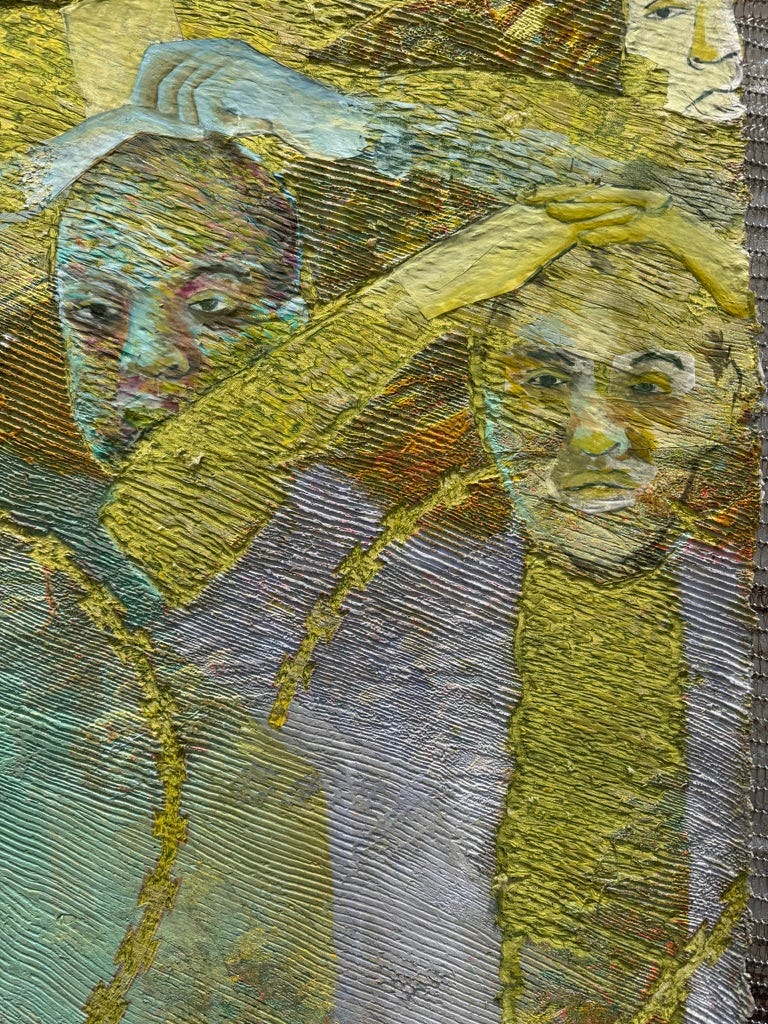
We went upstairs after this exhibit and found ourselves in the morning opening (????) of a chess-themed retrospective among many knitted, kitted, beautiful people taking selfies, sipping espressos, laughing into ring lights, etc. Dave and I were by far the worst dressed in the room. Since the exhibit itself was very showy and very shallow, perhaps the scene itself was the exhibition? I’ll never know.
Cheers,
Elizabeth
Donna Haraway (1988) Situated Knowledges: The Science Question in Feminism and the Privilege of Partial Perspective (link)
Meeting the Universe Halfway by Karen Barad, Timefulness by Marcia Bjornerud, All We Can Save, Infowhelm by Heather Houser, Pollution is Colonialism by Max Liboiron, Scott’s Last Expedition Vol. 1, The Two Cultures by C.P. Snow, When I Sing Mountains Dance by Irene Solá, Under the Sea Wind by Rachel Carson, Climatic Media by Yuriko Furuhata, Notes on Representation Vol. 8 – On Glaciers and Avalanches by Irene Kopelman, Merchants of Doubt by Naomi Oreskes and Erik M. Conway, Facing Gaia by Bruno Latour, Written in Stone by Chet and Mauren E. Raymo, Staying with the Trouble by Donna Haraway, Ages in Chaos by Stephen Baxter, The Great Derangement by Amitav Ghosh, After Ice ed. by Rafico Ruiz, Paula Schönach, and Rob Shields, Haa Léelk’w Hás Aaní Saax’ú / Our Grandparents’ Names on the Land ed. by Thomas F. Thornton, among others
You can subscribe to her newsletter here, join me living the Elif Life!!!!!
I really loved the de waal book, too (with the same caveats). Did you ever meet my friend Emma Logan? She's a ceramicist in the Bay Area who would probably love to co-create a class like you're imagining. https://emmaroselogan.com/home.html